
Follow Epolitics on Substack, Bluesky, Threads, or Twitter/X. This post was also published on Substack. Top photo via KendelMedia/Pexels.
Launched in 2006, Epolitics is written and edited by Colin Delany, who has helped nonprofits and political campaigns use digital tools in effective and creative ways since the early days of the political internet. He is also a frequent speaker and trainer and the author of How to Use the Internet to Change the World – and Win Elections. Contact him at cpd@epolitics.com.
Three Things We Can Learn from a Republican Canvasser in Arizona
Today let’s see what we can learn from the head of the Republican Party in the most-populous county in Arizona:
In the Phoenix metro area, Berland, the Maricopa County chair, said door-to-door canvassing has become more difficult since the onset of the war.
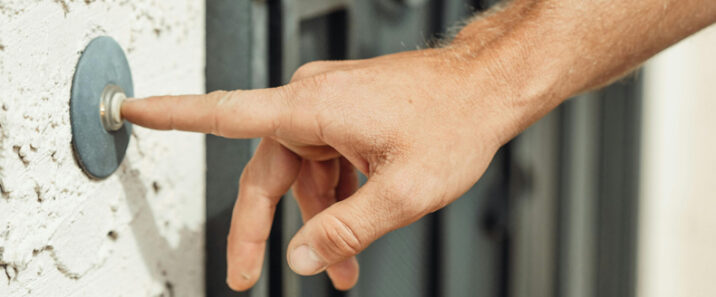
“We’re even going around canvassing neighborhoods and registered Republicans are yelling out the door, ‘go away, or I’m calling the police,'” Berland said. “I find that very discouraging.”
Discouraging indeed! This observation comes as we also see signs that Republican grassroots donations are drying up, at least in two battleground states. Between an unpopular war, a hard economy and a whiff of blasphemy in the air, Trump’s 2024 voter coalition seems to be suffering just a bit of disillusionment.
That’s ONE lesson we can learn from those Republican canvassers the party chair was talking about. Here’s another: Republicans in Maricopa County are canvassing NOW. They’re not waiting for the fall; they’re getting in front of voters today.
Last year, I talked about four good field organizing practices Democrats too often seem to forget. Number One? Starting early. In 2024, too many field organizing and canvassing campaigns only got rolling in the fall, when
Had they started months earlier, grassroots volunteers and staff could have begun contacting voters well before traditional campaign season. They would have worked in a more relaxed political environment, before TV and digital ads flooded people’s screens and their opinions hardened. As an experienced campaigner pointed out on a recent panel I attended, election season is the most difficult time to start building a narrative. By starting late, Democrats missed the opportunity last year to talk to people when they may still have had an open mind.
They also missed the chance to talk with people repeatedly to build rapport….
Besides missing the chance to reach voters early and often, campaigns also didn’t have time to train volunteers to handle conversations with skeptical or hostile voters:
Face-to-face conversation is one of the few things that can break through and reach people in an insanely crowded media environment, but only if those conversations go well. Late-starting field campaigns also give themselves little time to train volunteers to go back-and-forth with voters, some of whom will be skeptical or even hostile.
At least in Maricopa County in 2026, some Republican canvassers are already in the field more than six months before Election Day. I hope Democrats in the state are out there too, connecting with voters while we still have time to reach hearts and change minds.
Which brings us to our third lesson: the power of voter-data feedback loops. That Republican county chair is clearly paying attention to what canvassers have been finding on the ground. But what happens to the data after that? Too often, nothing. Insights from grassroots volunteers may or may not actually reach campaign (or national party) leadership in ways that can affect strategy and resource allocation.
It doesn’t have to be this way! And at least in 2008 and 2012, it wasn’t. Again from last year’s field article:
Unlike Clinton in Michigan in 2016, Obama’s staff used it to help make real decisions about where to put people and money. David Plouffe said after the campaign:
…In our own campaign, polling was just one way we viewed how we were doing in a state in the general election. We had a lot of voter identification work. We had a lot of field data. So we’d put all that together and model out the election in those states every week. So we’d say, okay, if the election were held this week based on all our data, put it all in a blender, where are we? And obviously, with technology today, we could measure this very carefully. We don’t have to wait for a state to report in how they did that night; we can look at it, down to the volunteer level, because we trusted our volunteers. We gave them the voter file, we said here are the people on your block, you go talk to ’em, you record the result of the conversation. We in Chicago could look at that…
…It makes you enormously agile. You’ve got real-time data, and that makes you make scheduling decisions and resource-allocation decisions and where to send surrogates and you’re adjusting those by the end multiple times a day. Not just down to the media market, but down to chunks of voters in those media markets. We’re not doing as well as we need to here, so we’ve got to throw a lot of our resources in there. These guys are making a surge in a media market, we’ve got to go try and correct that.
In 2012, if I remember correctly, those decisions included where to send high-level surrogates such as Michelle Obama herself. After the president’s reelection, Democrats continued to enjoy the fruits of his labors, including in Virginia’s 2013 off-year elections. Terry McAuliffe won a tight race for governor that year in part because of a statewide turnout machine that incorporated the same kind of voter-data feedback loops the Obama campaign employed.
Mobile canvassing apps SHOULD ease the process of moving data up the ladder, since field teams don’t have to fill out paper sheets after talking with voters anymore. But that only works if staff and volunteers enter the information accurately and consistently! Garbage data is worse than useful when it leads us astray. While you’re there, make sure volunteers know WHY their work is important, so they understand why they’re being asked to have those awkward conversations in the first place.
Of course, if American politics looks in November like it does now, canvassing (and campaigning in general) might not matter as much as we think. If this many of Trump’s voters are still this pissed on Election Day, many Democrats will win big by default.
But wave elections have a habit of opening opportunities in places where they don’t normally exist. In fact, direct voter outreach may be even MORE important for Democrats in a wave year, particularly in districts that have an unusual chance to swing. When Trump voters are wavering, conversations with canvassers and callers might be enough to push them over the edge — perhaps to stay home, if not to vote for a Democrat.
Just as state Democrats need to recruit candidates for every seat they can, as a movement we also need to be talking to as many voters as we can. In 2026, data models that predict “likely” Democratic or Republican voters may miss a whole lot of opportunities, and outreach programs that concentrate on the faithful may miss the chance to persuade. Perhaps cast your net wide this year?
Just please, start those conversations early.
– cpd