
Follow Epolitics on Substack, Bluesky, Threads, or Twitter/X. Top image via Wikimedia. This post was also published on Substack.

Launched in 2006, Epolitics is written and edited by Colin Delany, who has worked with nonprofits and political campaigns to help them use digital tools in effective and creative ways since the early days of the political internet. He is also a frequent speaker and trainer and the author of How to Use the Internet to Change the World – and Win Elections. Contact him at cpd@epolitics.com.
Recently in Epolitics:
- Will Grassroots Democrats Save Us from the DNC?
- AI is Not an “I Win” Button for Political Campaigns
- Democrats Must Compete in Hostile Territory This Year — Or Else
John McCain Cried “Communist,” Too — Before He Lost to Obama
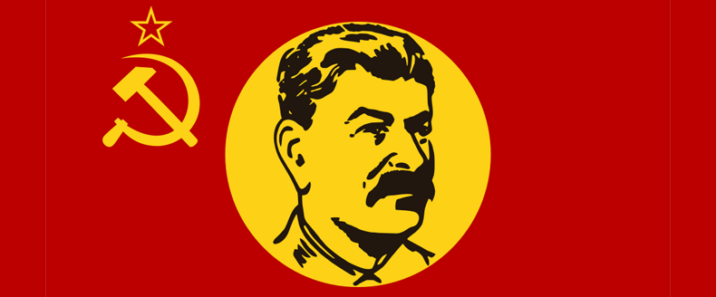
Stuck in Iran, with prices rising and public approval plummeting, Trump and his allies have turned to an old favorite tactic: calling Democrats “communist”. Ed Kilgore:
But the GOP is trying something fundamentally different heading into the 2026 midterms: calling Democrats “communists,” “Bolsheviks,” and “Marxists.” Unlike radical, these are terms with a specific content and a very long history. And it’s not just Donald Trump doing this, though he pioneered the practice by calling Kamala Harris a communist (and also a “monster”) back in 2020.
Of course, Kilgore means that Trump “pioneered” the Red Scare in our current political context, because this angle of attack has a long history in the U.S. — at least as far back as the Palmer raids and the mass deportation of leftists after the First World War.
It has a more recent political pedigree, too. John McCain’s memory has an air of sainthood about it now, but when he was alive, he was perfectly willing to echo the darker strains of conservative political discourse when he needed to. Let’s go back to the Epolitics archives and a 2008 article called “Halloween 2008: Obama, Witches and the Slow Death of Joe McCarthy”:
Boo! That’s all McCain and his supporters have left. Obama is a “Marxist,” a “socialist” and a “terrorist,” all fascinating words to see applied to a center-left senator from a Midwestern city embedded in a relatively conservative state. Not that most of the folks spouting the word “Marxist” would know a dialectical theory of history if it bit them in the ass, but that’s not the point: when used by right-wing activists, the actual meaning of words like “socialist” is irrelevant. They’re really just another way of saying “bad,” “scary” and “wrong,” and they’re what you use when you’re out of ideas. He’s a witch! Burn him!…
Hence the shouts of “terrorist” when Obama’s name comes up at McCain rallies: some may actually picture Obama in a suicide bomber’s vest in their minds, but for most it’s a stand-in for “other,” “alien,” “scary,” “non-white,” and “dangerous”…
If Florida in 2000 was tragedy, McCain/Palin is farce: this round of conservatism ends not with a whimper, but with a ragged fearful howl in the dark.
I wrote that piece in the last days of the 2008 presidential campaign, when Obama’s impending victory seemed more certain by the hour. McCain’s attempt to reinvigorate his campaign by picking a charismatic outsider (Sarah Palin) for veep had failed, grassroots enthusiasm was on the Democratic side, and McCain’s non-response to the financial crisis building that year put Obama in the driver’s seat in the months before Election Day.
So, communism it was! Adding to a long and varied history of scare tactics on the political right:
As East and West veered from confrontation to détente and back to confrontation, other scare terms came to the fore, particularly ones based on race and class. “Crime in the streets” was Nixonian code for keeping white people safe from poor minorities, just as “crack babies” justified draconian prison sentences for inner-city cocaine users 20 years later (their white suburban counterparts went to rehab). The 2000 election might have been a pivot point, since the peace and relative prosperity of the 1990s had taken much of the sting out of the scare words of the previous generation, but Bush’s response to 9/11 brought a new round of fear-mongering right back into the political toolbox — so much for “compassionate conservatism”.
In 2026, the targets may have switched from “welfare queens” to immigrant “invaders”, but the approach is the same: inflame the fears and prejudices of voters and give them someone to hate. For Trump, it’s a reflex. For the rest of us, it’s a curse — and historically at least, it has worked all too often.
But it didn’t elect John McCain in 2008, and I don’t think it’s going to save Trump in 2026. McCain’s struggle to stay on top of the financial crisis may have undercut his credibility, but Trump’s tariffs, his war of choice with Iran and his physical attacks on American cities have destroyed his, at least with anyone not huffing those MAGA fumes. As in 2008, this year’s grassroots energy is firmly on the Democratic side.
Alas, though, I was too sanguine eighteen years ago. I knew by then that Obama would win, but I did not understand how fast a new opposition would rise and how virulent it would be. The Tea Party came first, with a revolt theoretically over budget deficits but really about the fear of money flowing to minorities under a Black president. Then came Trump, who felt their resentment in his bones and welded them into an anti-immigrant/anti-minority movement, which birthed a full-fledged mob on January 6, 2021.
Perhaps it’s not false patriotism that’s the last refuge of the scoundrel, but fear and false patriotism united. In 2026, Donald Trump wallows in his Roy Cohn roots, Steve Scalise decries the “Bolshevik takeover of the Democrat Party”, and the Supreme Court revives the Republican war on the New Deal. As Faulkner put it, “The past is never dead. It’s not even past”.
So “a ragged fearful howl in the dark”, sure. But how this cycle of the conservative movement ends, no one can yet say. November may hint at an answer, but Trump and his team will remain in office for two more years, though I hope constrained by a Democratic Congress. As long as fear and nativism hold sway on so many millions of minds, however, we can never count out the dark side of conservative politics. No matter how much I wanted to, eighteen long years ago.
– cpd