
Follow Epolitics on Substack, Bluesky, Threads, or Twitter/X. Top image via Pixabay. This post was also published on Substack.
Launched in 2006, Epolitics is written and edited by Colin Delany, who has helped nonprofits and political campaigns use digital tools to achieve their political and policy goals since the early days of the political internet. He is also a frequent speaker and trainer and the author of How to Use the Internet to Change the World – and Win Elections. Contact him at cpd@epolitics.com.
AI does not write for this publication.
Recently in Epolitics:
- Democrats, Leave Something Behind This Year
- Will Trump Spend All His 2026 Money on TV? Will He Spend It at All?
- You Are Not a Presidential Campaign
- John McCain Cried “Communist,” Too — Before He Lost to Obama
AI Almost Got Us into a War with China This Year
Well, this is exciting: AI almost started a war with the People’s Republic of China a few months ago. From CNN:
The intelligence report, circulated across the US military this spring in the midst of the war with Iran, immediately set off alarm bells: A Chinese ship in the Middle East was transporting components of a nuclear weapons program.
The US military swung into action with plans to intercept the vessel, according to four sources familiar with the episode. According to two of the sources, armed members of the US military were preparing to board the ship. Military planes were in the air, one of those sources and another source familiar with the incident said.
It was only just before the planned operation that officials dug deeper into the report put together by a special operations command analyst and found it had been generated with the help of artificial intelligence (AI) — and that a chatbot the analyst had used inaccurately identified the material the ship was carrying…
The report, according to one of the sources, was “entirely false.” But it also “almost started a war,” the source said. Any US operation against a Chinese vessel could have risked spiraling into an armed conflict between the two nations.
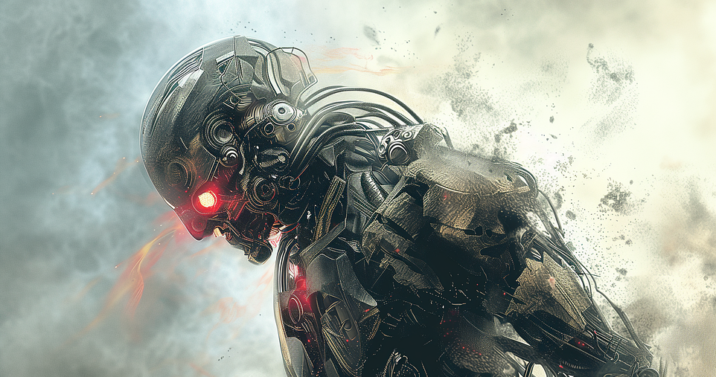
THIS is the kind of AI Apocalypse we should be worried about right now. Not that the robots are going to take over tomorrow, but that some idiot will let one hallucinate us into a war. Bonus points if it’s with another nuclear power!
I regularly hear from enthusiasts that we’ll eventually solve AI’s constant tendency to make things up out of whole cloth, but others suggest that hallucinations may be inherent in Large Language Models, such as the ones that power chatbots. At heart, LLMs are statistics engines — they analyze massive amounts of human writing and other creativity to find correlations among the pieces, all so they can predict which word comes next in the awkward breakup text you just asked it to draft.
But that process is divorced from the actual world that those words describe, and the machines can string phrases together that seem like they fit but that do not accurately describe reality. Bad enough in a speech, a fundraising email or a client report, but potentially deadly when we’re talking about war. I hope it fills you with good cheer that the U.S. military is all-in on using AI for targeting!
Of course, this situation has serious implications for those of us working in the political trenches this year, too. When I moderated three AI-related panels for the Campaigns & Elections folks at their Digital Campaign Summit last spring, every one of the experienced political staffers on stage with me noted the absolute necessity not to let an AI’s work product out into the world without careful human review.
If you’re using it for data analysis or opposition research, that means spot-checking some of its calculations or conclusions. If you’re using it to crank out fundraising messages or canvassing scripts, that means reviewing every one of them with a political eye — the AI has no concept of what may cause a campaign finance violation or spark a negative ad from an opponent.
Yes, AI can help campaigns and other political communicators crank out more work in less time, and many in the field put it to productive use every day. But despite the word “intelligence” in the name, this technology is not “smart” in the way a human is — or should be. If you don’t take seriously the idea that it can lead you astray while sounding very confident about it, you’ll likely end up looking pretty dumb yourself. As one of the folks interviewed by CNN said, “AI allows you to get to a bad idea faster.”
Please kids, use AI responsibly. Don’t let it embarrass your boss or torpedo your campaign. And for all of our sakes, don’t let it hallucinate you into starting a war.
– cpd